18 Seizure First Aid
When a seizure happens, it can be frightening to watch, especially the first time. Most seizures stop on their own within one to three minutes and do not require emergency treatment. Knowing what to do, and what not to do, can make a real difference in keeping your child safe.
18.1 Responding to a Convulsive Seizure
Convulsive seizures (also called tonic-clonic or grand mal seizures) involve rhythmic jerking of the body and are often the most alarming to witness. Here is what to do:
Try to stay calm and stay with the person. Do not leave them alone.
Time the seizure. Note when it started. This is important for deciding whether rescue medicines are needed.
Protect the head. Place something soft, such as a folded jacket or a pillow, under their head to cushion it from the ground.
Clear the space. Move any hard or sharp objects away from the area. Do not restrain the person’s movements.
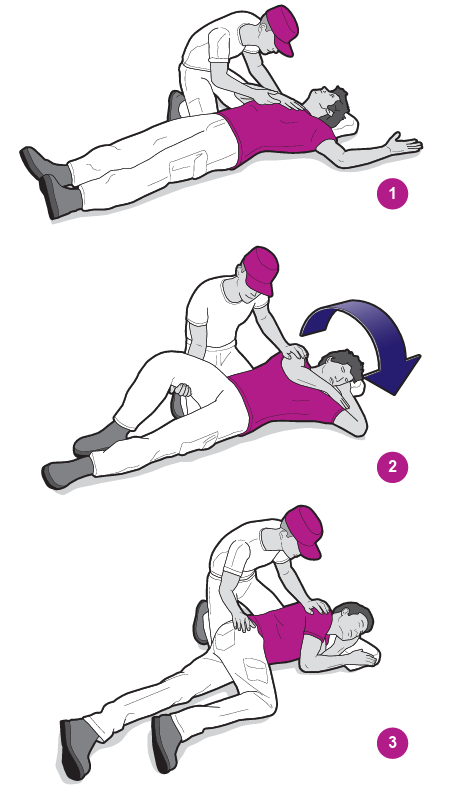
Turn them on their side. Gently roll the person onto their side (the recovery position). This helps keep the airway clear and prevents fluid from blocking breathing.
Stay until they are fully alert. After the seizure ends, the person will likely be confused, sleepy, or disoriented. This is normal and is called the postictal period. Stay with them and speak calmly until they are fully aware of their surroundings.
These common instincts can cause harm:
- Do not put anything in the person’s mouth. People cannot swallow their tongue during a seizure. Placing objects in the mouth risks broken teeth, injury to the jaw, or harm to you.
- Do not hold the person down or restrain their movements. This can cause injury to you both.
- Do not give water or food by mouth until the person is fully alert and able to swallow safely.
18.2 Responding to a Focal or Absence Seizure
Not all seizures involve convulsions. Many seizures are more subtle: a blank stare, repetitive hand movements, lip smacking, or a brief period of unresponsiveness.
For these seizures:
- Stay nearby and observe.
- Do not restrain the person or try to stop their movements.
- Speak gently and reassuringly, but do not expect a response during the seizure.
- Guide them away from danger if they are walking or moving automatically, holding their arm gently rather than grabbing.
- Stay with them until they are fully alert.
These seizures often last only seconds to a couple of minutes. The person may have no memory of the event afterward.
18.3 Rescue Medications
Some children with epilepsy are prescribed a rescue medication, a fast-acting medication given during a prolonged seizure to help bring it to an end. Common examples include diazepam rectal gel (Diastat), midazolam nasal spray (Nayzilam), or diazepam nasal spray (Valtoco).
If your child has a rescue medication, your neurologist will provide specific instructions for when and how to use it. These instructions should be written in a seizure action plan and shared with school staff, caregivers, and anyone else who may be with your child during a seizure.
A seizure action plan is a one-page document that outlines:
- What your child’s typical seizures look like
- How long they usually last
- What to do during and after the seizure
- When and how to give rescue medication
- When to call 911
- Emergency contact information
Ask your neurologist for a seizure action plan at your next visit. Many centres have standard templates. It should be updated whenever the plan changes.
18.4 After the Seizure
The period after a seizure, called the postictal phase, can last minutes to hours. During this time, your child may:
- Be very sleepy or difficult to wake
- Be confused or disoriented
- Have a headache
- Have weakness on one side of the body (called Todd’s paralysis), which resolves on its own
- Feel emotional or upset
Allow them to rest. Do not give anything by mouth until they are fully alert.
Contact your neurologist’s office to report any seizure that is longer than usual, more severe than usual, or different in character from what you have seen before.