12 Seizure Rescue Medications
12.1 What Makes a Seizure an Emergency?
Most seizures, while frightening to witness, usually stop on their own within a couple of minutes, often before anyone has had time to do anything at all. The body has natural mechanisms for ending seizures, and in most cases those mechanisms work well.
However, seizures can sometimes last longer than they should, or occur in rapid succession without the person fully recovering in between. When a seizure lasts five minutes or more, it has entered a territory called status epilepticus, a medical emergency that requires urgent treatment. The brain, under prolonged electrical strain, becomes increasingly difficult to quiet, and the longer the seizure continues, the harder it becomes to stop and the greater the risk of harm.
The five-minute threshold is the most important number for families to know. If a convulsive seizure has not stopped on its own within five minutes, it is time to act, both by giving a rescue medication if one has been prescribed, and by calling emergency services. These two actions should happen together, not one instead of the other.
For some people, the threshold may be set lower than five minutes by their neurologist. This is common when someone has a history of prolonged seizures, a condition known to carry higher risk, or has previously required emergency treatment. Your child’s or your own seizure action plan will specify the timing that applies to your particular situation. When in doubt, always follow the plan.
Cluster seizures, meaning multiple seizures occurring within a short window of time, such as three or more in a single day, are another situation where rescue medications are often used, even if each individual seizure is brief. The cumulative burden of repeated seizures can be exhausting and potentially harmful, and breaking the cycle early is often the right approach.
12.2 How Rescue Medications Work
Nearly all seizure rescue medications belong to a class of drugs called benzodiazepines. These medications work by enhancing the effect of a naturally occurring chemical in the brain called GABA (gamma-aminobutyric acid), which acts as the brain’s main “calming” signal. During a seizure, the brain’s electrical activity has become abnormally synchronized and self-sustaining. Benzodiazepines essentially turn up the volume on the brain’s own braking system, helping to interrupt that runaway activity and restore a more normal state.
They work quickly, often within minutes of administration, which is exactly what is needed in an urgent situation. This speed is one of the reasons benzodiazepines have been the cornerstone of acute seizure treatment for decades, both at home and in the emergency department.
Because benzodiazepines are sedating, it is normal and expected for a person to be drowsy, confused, or even briefly unresponsive after receiving a rescue dose. This is not a sign that something has gone wrong. It is, in fact, often a reassuring sign that the medication has done its job. The sedation typically wears off over the course of an hour or two, though this varies by medication and by the individual.
12.3 Available Options
Not all rescue medications are given the same way, and the route of administration matters enormously in an emergency. Swallowing a pill when someone is actively seizing is not possible, and waiting for a pill to be absorbed through the stomach would take far too long in any case. For this reason, seizure rescue medications are designed to be absorbed rapidly through other routes: through the nose, between the cheek and gum, under the tongue, or rectally.
In North America, the most commonly prescribed options are the following.
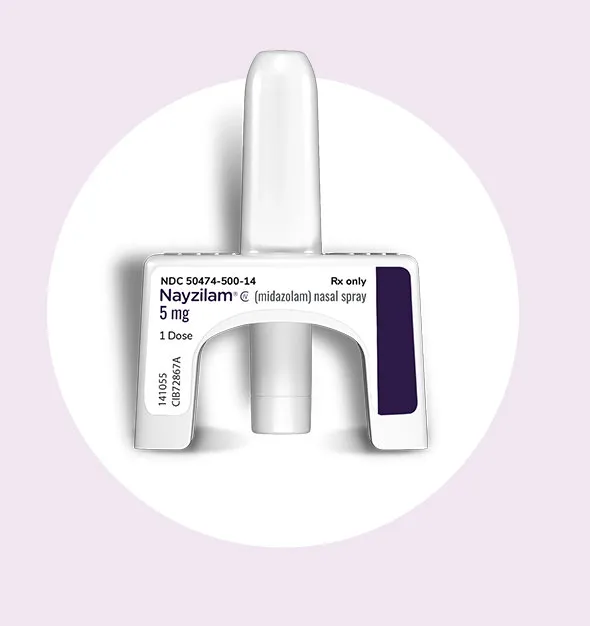
Midazolam nasal spray (Nayzilam) is currently the most widely used rescue medication for older children and adults. It is administered as a spray into one nostril and, if the seizure has not stopped after ten minutes, a second dose can be given into the other nostril. The nasal route allows the medication to be absorbed quickly through the rich blood supply lining the nose and to reach the brain rapidly. Nayzilam is approved for patients twelve years of age and older. It comes in a pre-filled, ready-to-use device, which makes it straightforward for caregivers and school nurses to administer without specialized training.
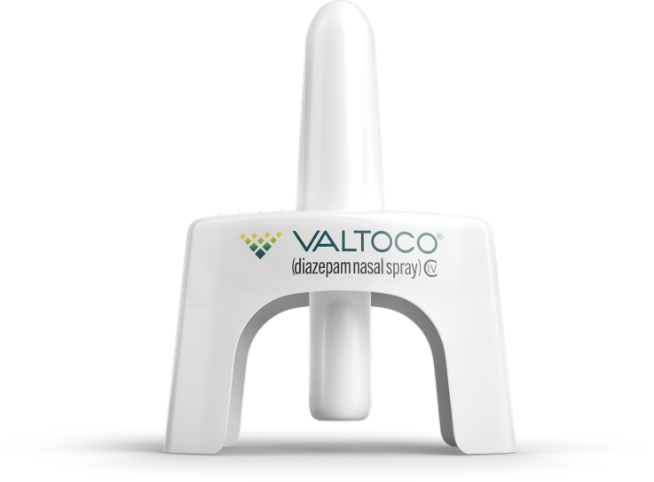
Diazepam nasal spray (Valtoco) is another nasal option, approved for patients six years of age and older. It works similarly to Nayzilam and is available in several different dose strengths, allowing for weight-based dosing that is particularly relevant in pediatric care. Like Nayzilam, it comes pre-measured and ready to use.
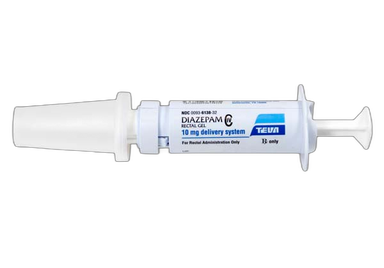
Diazepam rectal gel (Diastat) was for many years the only widely available home rescue medication, and it remains an important option, particularly for younger children or those in whom nasal administration is not feasible. A pre-filled applicator delivers the medication rectally, where it is absorbed quickly into the bloodstream. While the rectal route can feel uncomfortable or undignified, it is highly effective and well-studied. Diastat is approved for children as young as two years of age.
Buccal midazolam, administered by squirting liquid midazolam between the cheek and gum, is widely used in many parts of the world, particularly in the United Kingdom and Europe, where it is considered a first-line option. In Canada and the United States it is less formally standardized as a rescue preparation, though some centres do prescribe compounded versions. It is worth asking your neurologist whether this is an option available to you.
The right choice among these options depends on a number of factors: the age and weight of the person with epilepsy, their ability to tolerate different routes of administration, caregiver comfort and training, and the specific settings in which the medication might need to be given (at home, at school, during travel). There is no universally “best” option. What matters most is that the chosen medication is one that caregivers feel confident and prepared to use when the moment comes.
12.4 Who Can Give It, and Where
One of the most common questions families ask is whether they are allowed to give a rescue medication, particularly in a school or public setting. The answer is generally yes, with some important practical considerations.
At home, a caregiver who has been trained by a nurse or pharmacist can administer a rescue medication. Your neurology team will typically arrange this training when the prescription is first given, and it is worth asking for a refresher periodically, especially if caregivers change, or if the medication has never actually needed to be used and the training feels distant.
In the school setting, the rules vary by region and school board, but in most jurisdictions school nurses and trained staff members are permitted to administer prescribed rescue medications to students with a documented seizure action plan on file. This requires advance planning: the prescription, the medication itself (stored appropriately at the school), a copy of the action plan, and documented training for the relevant staff must all be in place before an emergency arises. It is worth having a specific conversation with your school’s administration each year to confirm that everything is current.
In public settings, whether at a sports event, on a field trip, or at a family gathering, a designated trained caregiver should ideally be present whenever possible. For older adolescents and adults who self-manage their epilepsy, it may be appropriate to keep the rescue medication with them at all times, in an accessible location.
12.5 After the Rescue Medication Is Given
Once a rescue medication has been administered, the immediate priority is to monitor the person closely and ensure their airway is clear. They should be positioned on their side (the recovery position) if they are unconscious or not fully alert, to prevent aspiration in case of vomiting. Do not offer anything by mouth until they are fully awake and alert.
Emergency services should be called (911 or your local equivalent) in any of the following situations: the seizure does not stop within five minutes of giving the rescue medication; a second dose has been given and the seizure is still ongoing; the person does not return to their baseline level of consciousness within a reasonable time after the seizure ends; there is an injury during the seizure; or you are simply uncertain and feel that the situation is beyond what can be safely managed at home. When in doubt, call. Emergency services would always rather respond to a call that turns out not to require hospitalization than to one that comes too late.
It is important to understand that giving a rescue medication does not mean the emergency department visit is unnecessary. The two are not mutually exclusive. Rescue medications buy time and can prevent a dangerous escalation, but they are not a substitute for medical evaluation when the situation warrants it.
12.6 Practical Matters
Rescue medications should be stored according to the instructions on the package, generally at room temperature, away from excessive heat and moisture. Check the expiry date regularly and arrange renewal well before the medication expires, so there is no gap in coverage.
Keep a rescue medication wherever the person with epilepsy spends significant time: at home, at school, and ideally with a trusted caregiver when travelling or participating in activities away from home. Having a single prescription with a single location is rarely sufficient.
After a rescue medication is used, contact your neurology team to let them know. This is important for a few reasons: it helps the team track how the epilepsy is behaving, it triggers a conversation about whether the current treatment plan needs adjustment, and it ensures that a replacement prescription is issued so the supply is restored promptly.
Finally, make sure that everyone who might ever need to give this medication has actually seen it, held it, and practiced (with a training device if available) how to use it. Practising with the device when things are calm makes it much easier to use under stress. An unused, unfamiliar rescue medication tucked at the back of a cabinet is far less valuable than one that every caregiver in the household could find and use in the dark.
A rescue medication is only one part of a broader emergency plan. Your neurologist should provide you with a personalized seizure action plan, a written document that specifies what a typical seizure looks like for your family member, when to give the rescue medication, when to call emergency services, and who to contact afterward. This document should be shared with schools, camps, and any other setting where your child or family member spends time. We discuss seizure action plans in more detail in the chapter on Seizure First Aid.